|
|
Abkhazia
Legal basis of statehood and sovereignty
Chapter 2. Statehood of Abkhazia
2.6. Abkhazian statehood during the post-Soviet period
Disintegration of the Soviet Union in 1991 sharply changed the political
situation in the country and its statehood. The government of the USSR,
understanding that an irreversible process had occurred under the influence of
centrifugal forces and, aspiring to give it a civilised character, developed
the law defining rules for the exit of republics from the structure of the USSR.
The Constitution of the USSR provided such rules, but the method of implementing
them had not been developed. The legalised method of exit of republics from the
structure of the USSR applied to both union and autonomous republics which
were a part of such union republics, and was regulated by the Law of the USSR
from April 3rd, 1990 “About the order of decision of questions connected
with an exit of a union republic from the USSR”.
“Article 3. In a union republic incorporating autonomous republics,
autonomous regions and autonomous districts, a referendum is conducted
separately for each autonomy. The people of autonomous republics and formations
have the right to an independent decision on the question of staying in the
USSR or remaining with a union republic leaving the USSR, and also on the
question of the legal status of their states.
Article 6.... In a union republic incorporating autonomous republics,
autonomous regions, autonomous districts or places of compact residence of
national groups mentioned in the second part of article 3 of the present Law,
referendum results are considered by the union republic Supreme Soviet
together with the Supreme Soviet of the autonomous republic and corresponding
Councils of People’s Deputies.
Article 9. Referendum results in a union republic about an exit from the
USSR, and also opinions of the governments of union republics, autonomous
republics, autonomous regions and districts, are considered by the Congress of
People's Deputies of the USSR on presentation from the Supreme Soviet of the
USSR, in coordination with the Supreme Soviet of the leaving republic. The
Congress of People's Deputies of the USSR establishes a transition period not
exceeding five years, during which time questions arising in connection with the
exit of a republic from the USSR should be resolved.
Article 20. Upon termination of a transition period or at the prescheduled
settlement provided by the present Law, the Supreme Soviet of the USSR convokes
the Congress of People's Deputies of the USSR to make the decision confirming
the end of the process, with agreement of interests and satisfaction of claims
of the leaving republic, and also of the USSR, union republics, autonomous
republics, independent formations and the national groups mentioned in
the second part of article 3 of the present Law.
From the moment of acceptance of such a decision by the Congress of People's
Deputies of the USSR the exit of a union republic from the Union is considered
to have taken place, and People's Deputies of the USSR from the leaving republic
lose their powers. The Congress of People's Deputies of the USSR makes
corresponding alterations to the Constitution of the USSR”.
As follows from this document, all actions necessary for the achievement of
sovereignty for each union or autonomous republic of the former USSR were
specified. The resolution of the Supreme Soviet of the USSR on April 3rd, 1990
“About putting into action the Law of the USSR “About the order of decision of
questions connected with an exit of a union republic from the USSR” was also
accepted.
It should be explained that the exit of republics from the structure of the
USSR or from union republics (with reference to autonomous republics) was
possible before the commissioning of the specified Law, but only if the
interests of the parties involved - the USSR and the union or autonomous
republics – were not thereby harmed. If infringement of the rights or freedom of
one of the interested parties occurred, or if there was an infringement of the
required steps to exit from an agreed relationship by one of the subjects of
international law, documents on the basis of which illegal actions were made
were considered illegitimate and void from the very beginning. Georgian “law
creations” concerned such cases.
On the basis of the Law relating to secession from the USSR, autonomous
republics, in the case of an exit of the union republic from the structure of
the USSR, possessed the right to independently solve the question
regarding their remaining in the USSR, and the legal status of their republic.
Georgia, having broken the Law of April 3rd, 1990 and having taken a unilateral
decision for itself and for autonomous formations within its structure,
left the Soviet Union. Leaving the USSR, it illegally included the independent
state of Abkhazia in its area of interests, having broken Article 3 of the Law
on secession from the USSR and having trampled on the basic norms of
international law. At the same time, the government of Georgia denounced all
legislative documents accepted since 1921 during the existence of the USSR and
RSFSR.
The Abkhazian АSSR, which entered into the structure of the former Georgian
SSR in 1931 as an autonomous republic, should have been excluded from this
structure, especially as Abkhazia, following Item 3 of the Law on an order of
secession from the USSR, made the decision to remain as a part of the Soviet
Union. According to Item 2 the decision was taken in favour of the participation
of Abkhazia in a referendum on March 17th, 1991 “about the necessity of
preservation of the USSR as an updated federation”. In that referendum with 318
thousand people having the right to vote, more than 166 thousand people (52.3 %
of the population) took part, and 164,231 people, i.e. 98.6 %, voted for
preservation of the USSR. According to Item 24 of the Law of the USSR “About
national voting (referendum) in the USSR” the Central Commission of a referendum
of the USSR established that in the Republic of Abkhazia the majority of voices
of the population had voted for preservation of the USSR, and accordingly for
staying within its structure.
Here it is necessary to report that even without the Georgian enclave of
Abkhazia, who did not accept participation in the referendum, 51.6 % of all
citizens having the right to vote supported Soviet Union preservation.
It is known that before the disintegration of the USSR, Abkhazia put a
question about restoration of its status as a union republic, which had been
lost due to Stalin’s decision, and stated it was not going to leave the USSR,
having voted for Union preservation. The Supreme Soviet of the Abkhazian SSR,
realising the incompetence of actions by Georgia, accepted on August 25th, 1990
the Declaration on the state sovereignty of ASSR and the Resolution on legal
guarantees of protection of the safety of Abkhazia.
“The declaration on the state sovereignty of the Abkhazian Soviet Socialist
Republic is accepted by the tenth session of the Supreme Soviet of the Abkhazian
АССР XI convocation on August 25th, 1990
... The Abkhazian Soviet Socialist Republic is a sovereign socialist state
created on the basis of realisation by the Abkhazian nation of its inalienable
right to self-determination, and leadership of the people in determination of
their destiny. The sovereignty of the Abkhazian Soviet Socialist Republic
extends across all territory of the Abkhazian SSR.
The Abkhazian Soviet Socialist Republic possesses all completeness of
government power on its territory outside of limits of the rights voluntarily
transferred by it to the USSR and the Georgian SSR on the basis of treaties
concluded with them...”.
In the resolution of the Supreme Soviet of the ASSR “About legal guarantees
of protection of the statehood of Abkhazia” from August 25th, 1990 facts
confirming the illegitimacy of Georgian claims in relation to the territory and
statehood of independent Abkhazia, based on the historical development of mutual
relations between these countries, are given:
“1. To recognise that the Democratic Republic of Georgia, having broken the
Treaty from June 11th, 1918, and also the Agreement concluded earlier between
the Abkhazian National Council and the National Council of Georgia from February
9th, 1918, carried out military intervention in the second half of June
1918 for the purpose of the violent joining of the territory of Abkhazia and
liquidation of the independence of the Abkhazian people.
This action, which broke an international legal principle forbidding
the joining of other territories by force, was illegal.
2. To recognise as illegal and void the part of the Treaty between
Georgia and RSFSR which concerns the territory of Abkhazia, because this treaty
was concluded on May 7th, 1920 under conditions of military occupation of
independent Abkhazia.
3. According to the Resolutions of the Supreme Soviet of the Georgian Soviet
Socialist Republic from November 18th, 1989, March 9th and June
20th, 1990 all state structures, existing and having existed in Georgia since
February 1921, are recognised as illegal and void, from which it
logically follows that all agreed relations between Georgia and Abkhazia,
concluded by former public authorities, are also illegal, and the situation of
Abkhazia being within the structure of the Georgian Soviet Socialist Republic is
deprived of legal validity. Hence, the lawful form of statehood of Abkhazia is
the Soviet Socialist Republic of Abkhazia created by the free will of the
people of Abkhazia and proclaimed on March 21st, 1921”.
Relations between Soviet Georgia and Soviet Abkhazia arose in a certain
historical situation, and they naturally lost their force at the same
time as the disappearance from the historical arena of the Soviet Union.
It is necessary to note one more essential factor defining the adherence of
Abkhazia to the USSR – the citizenship of its people. To understand this, it is
necessary to look back into history. It is known that Abkhazia, in the form of
a district, department, or independent princedom, was a Russian province in
Transcaucasia, along with Tiflis, Erivan and other provinces of the Russian
Empire. The people of these territories were citizens of Russia and any question
about citizenship of other countries or about double citizenship did not apply,
and could not apply. However, the ethnic component of the people living there
was preserved.
With the wreck of the Russian Empire and the creation of a new statehood i.e.
the Russian Republic (which occurred on September 1st, 1917), the Provisional
Government, being a legitimate body, introduced the institute of citizenship in
the country, covering all territories of the former Russian Empire. This was the
largest-ever change in legal regulations concerning citizenship. All former
subjects of the Russian state, such as inhabitants of Transcaucasia, including
Abkhazia, from this date obtained a new status as citizens of Russia. From this
moment the principle of receiving Russian citizenship “by the right of blood”
began to operate, i.e. if parents are citizens of Russia, the citizenship
of those parents is automatically extended to children born to them.
After the October revolution, the reformed state was identified as the
inheritor of both the Russian Empire and the subsequent Russian Republic, and
retained the created institute of citizenship. The decree of November 11th,
1917 cancelled the division of inhabitants of Russia into ranks and estates, and
the privileges corresponding to these categories were withdrawn. The same term
was simultaneously confirmed for all inhabitants of the reformed state i.e. the
Russian Federation, which was the name “citizen of RSFSR”. On July 10th, 1918
the Constitution of the RSFSR was accepted, which proclaimed all who earlier had
citizenship of the Russian Empire as citizens of the new state. There was an
identification of the new state which confirmed its continuity both from
Imperial Russia, and from the Provisional Government. On October 25th,
the very day after concluding the October Revolution, V.I.Lenin on behalf of
Petrograd Temporary Revolutionary Committee appealed “To citizens of Russia”,
confirming the continuity of the republican power of the Provisional
Government.
Governors of separatist countries, in particular Georgia, which established
sovereignty on May 26th, 1918 and created an independent state, refused
Russian citizenship. At the same time, an agreement with Georgia which would
have provided an option for creation of its own Georgian citizenship upon its
secession of the Russian Republic, was not signed by the representatives of
Georgia. Suitable treaties were signed only with Lithuania, Latvia and
Estonia. They, under the conditions of the Brest-Litovsk treaty, were given
independence. In this instance, Georgia broke the norms of international law
concerning the method of exit of a country from the structure of another state.
Abkhazia as an independent sovereign state through the institute of
citizenship continued to remain as a part of the RSFSR, and its inhabitants
possessed only Russian citizenship. This citizenship was retained during the
period from 1918 to 1921, during the annexation and occupation of Abkhazia by
Georgia, as inhabitants of Abkhazia during this period did not declare a refusal
of the citizenship of the RSFSR or take Georgian as its basic citizenship (or
double, along with Russian). If such a choice had been made, but had taken place
under the conditions of annexation, it would have been legally insignificant.
In Abkhazia, Soviet power was established on March 4th, 1921, and at the same
time the independent Soviet Socialist Republic of Abkhazia was proclaimed and
formed at the 1st Congress of Councils of peasants’ and workers’ deputies.
From the moment of releasing Abkhazia from Georgian occupation, i.e. March 1921,
the country made a choice in favour of staying in the structure of the RSFSR as
a Union Republic, thus keeping the status of “citizens of Russia” for the
population of Abkhazia.
The sovereignty of the Soviet Socialist Republic of Abkhazia, in view of its
voluntary joining the Transcaucasian Soviet Federal Socialist Republic (RSFSR)
“is limited only by the subjects specified in Constitutions of these
Unions”... Firstly, inhabitants of Abkhazia upon joining the RSFSR did not lose
their Abkhazian citizenship and did not acquire Georgian, and secondly,
voluntary membership on an equal rights basis provided the possibility, in case
of need, of an exit of Abkhazia from this association, as defined by the
equality of the parties.
The regulation about citizenship of the USSR from 1931 confirmed that each
person who was in the territory of the USSR was recognized as a citizen of the
USSR if not a subject (citizen) of a foreign state. The same document included
the additional point that if a citizen firstly of the USSR was also a citizen
of the union republic where he lived, the choice of citizenship of that union
republic was a personal prerogative for each citizen of the USSR. The people of
Abkhazia mainly made the choice in favour of: a) preservation of their
citizenship of the USSR; b) receipt of citizenship of Abkhazia, which they
possess hitherto.
The law on citizenship of the USSR from 1978 confirmed an accession to
citizenship of the country, meaning Russian citizenship, for those persons who
had it at that time, i.e. confirmed the citizenship principle “by the right of
blood” and “by the right of birth”. Citizens of Russia by “the birth right” were
the persons who were born in the territory of Russia until the moment of signing
of the Treaty on the formation of the USSR (till December 30th, 1922), at
which signing Soviet Abkhazia, as a sovereign state subject to the law,
participated and thus was one of the founders of the USSR even if they have
subsequently lost this status. The Law on citizenship from May 23rd, 1990 was
also the same. Both of these laws accordingly confirmed the status of Russian
citizenship for the people of Abkhazia.
Laws of 1978 and 1991 gave citizens of the USSR the right to reside in any
part of it, i.e. in any union republic, whilst remaining a citizen of the
USSR, and the right to have in addition an accompanying citizenship. These laws
allowed for moving to and resettlement in union or autonomous republics with a
special ethnic structure and their own republican citizenship by persons having
an ethnic type unusual for these countries. Under these laws, immigrants to
Abkhazia from regions of Georgia who had Georgian (additional) citizenship
streamed in and created conditions there for the destruction of its ethnos and
state structure. However it is necessary to note that legal registration of
republican and autonomous citizenship in the country was formally absent,
therefore throughout all the period of Soviet power only Russian citizenship
existed in Abkhazia.
Citizenship is a legal condition. The uncontrollable change of a demographic
situation connected with the settling in a country of persons of other
citizenship, as events of the last decade of the 20th century have shown, leads
to irreparable consequences, up to a change of the form of statehood,
replacement of ethnic structure of the population of the country, genocide, and,
most importantly, creation of a fifth column attempting the overthrow of the
existing political system, as took place in Abkhazia.
The laws stated above, confirming Russian citizenship for the people of
Abkhazia, officially did this by “citizenship acquisition in a procedure for
registration”. The people of Abkhazia had the right to Russian citizenship, as
did the population of other former republics of the USSR (nowadays the CIS), and
were by definition citizens of the Russian Federation as no other option had
been chosen in a referendum on March 17th, 1991. For reception of the document
confirming Russian citizenship, a simplified procedure was introduced.
Registration of this document is undertaken only by law-enforcement bodies.
By 1991 in the territory of the ex-GSSR which also included the Autonomous
SSR of Abkhazia, there appeared two states not connected with each other:
Georgia, which had declared its independence and secession from the USSR and
refused Russian citizenship by this declaration, and Abkhazia, which continued
to remain a subject of the USSR and whose citizens had kept Russian citizenship.
Hence, the legal state relations between Abkhazia and Georgia, created and
regulated by Soviet legislation, ceased also on the basis of Soviet
legislation.
It is a fact that from the moment of acceptance by Georgia of “the Decree
about Independence” on August 25th, 1990 till the moment of disintegration of
the USSR on December 21st, 1991, Abkhazia remained a subject of the USSR, and
in this capacity it participated in negotiations during which the question of
reforming the USSR was being solved. During this period, the chairman of the
Supreme Soviet of Abkhazia was a member of the Federation Council of the USSR
(after its abolition - a member of the State Council of the USSR) and a member
of the Supreme Soviet of the USSR.
Abkhazia did not accept participation in presidential elections in Georgia
and in the work of its authorities, because it could not be a subject of the
USSR and at the same time be a part of independent Georgia. Moreover,
according to regulations about the exit of republics from the structure of the
USSR, the Supreme Soviet of the USSR did not make a decision regarding the
allocation of autonomous Abkhazia to the separated Georgia. After the
termination of existence of the USSR the Supreme Soviet of Abkhazia on July
23rd, 1992, according to regulations about secession from the USSR, made the
decision to cancel the Constitution of 1978 and revert to the Constitution of
1925, according to which Abkhazia was a sovereign state, the subject of
international law.
It should be noted that actions of the Abkhazian SSR in this case were
defined by the Law of the USSR “About differentiation of powers between the
USSR and subjects of the federation” from April 26th, 1990, articles from which
granted it the following rights:
“Article 1... Autonomous republics are Soviet socialist states, and are
subjects of the federation of the USSR. Autonomous republics and autonomous
formations enter into union republics on the basis of free self-determination
of their peoples, and possess all completeness of state power in their
territories outside of the limits of powers transferred by them to the
USSR and union republics.
Relations of autonomous republics and autonomous formations with union
republics into the structure of which they are included, are defined by
agreements and treaties concluded within the limits of the Constitutions of
the USSR, Constitutions of union and autonomous republics, and the present
Law.
Article 6. The exclusive management of the Union of Soviet Socialist
Republics in the name of its supreme bodies of state power relates to:
Item 2) acceptance into the structure of the USSR of new union republics, and
confirmation of any new or amended status of existing autonomous republics,
regions or districts;
Item 3) the resolution of disputes between union republics, or between union
and autonomous republics or formations, if the question is addressed to bodies
of the USSR;
Article 11.... In case of contradiction between the Constitution of a union
or autonomous republic and the Constitution of the USSR, the Constitution of
the USSR operates. In case of contradiction of laws and other decrees of
the supreme bodies of state power of union or autonomous republics with the
Constitution of the USSR, the laws of the USSR and other decrees of the supreme
bodies of state power of the USSR, the decrees published by corresponding
bodies of the USSR operate”.
The position of the Abkhazian side which had supported the creation of the
updated Union, did not contradict either with international legal norms, or with
the current legislation of the USSR. The Republic of Abkhazia at the moment of
formation of the Georgian Democratic Republic (on May 26th, 1918) was a
sovereign state. Whereas legal state relations between Abkhazia and Georgia had
arisen from the Treaty of June 11th, 1918 and from some later treaties and
agreements, Georgia could not unilaterally change the character of mutual
relations with Abkhazia, and, especially, considered it as a vassal region
dependant upon Georgia. It also contradicted the legislation of the USSR
regulating the relations between union and autonomous republics. Thus, actions
of the authorities of Georgia led to a rupture in legal state relations
between Georgia and Abkhazia. The documents accepted by the Supreme Soviet of
Abkhazia show that as a result of earlier decisions accepted by the Supreme body
of the Georgian SSR, the entrance of Abkhazia into the structure of Georgia
under any conditions lost its legal basis.
As a result of the denouncement by Georgia of all legislative decrees and
other legal documents accepted during the period from 1921 to 1991, concerning
mutual relations with Abkhazia, and also as a result of the unilateral
acceptance of the decision by Georgia about secession from the USSR and
creation of an independent state, the treaty about the entrance of Abkhazia into
the structure of Georgia automatically lost its validity. It contradicted
agreed relations between Abkhazia and Georgia. Occurrence of the Abkhazian SSR
in the structure of the GSSR started under the conditions of Georgia entering
into the structure of the TSFSR and the USSR. As Abkhazia continued to remain as
a part of the Union, it accordingly continued to also remain a sovereign state
within its 1918 borders as a part of the USSR, and the subject of international
law.
In historical and political literature covering the period of the exit of
Georgia from the structure of the USSR, reference is made to documents
denouncing legal decrees and mutual relations of the specified states.
Originals of these documents are not always accessible, however we will dare
to give excerpts from them and to give short comments about their
contents.
One of the documents which led to the cancellation of all mutual relations
between Georgia and the countries which were in the USSR included the
decision of the Extraordinary 13th Session of the Supreme Soviet of the GSSR on
March 9th, 1990 “About guarantees of protection of the State sovereignty of
Georgia”. On the basis of the resolution of the committee of the Supreme
Soviet of the GSSR, a conclusion was reached about infringement of the treaty
of May 7th, 1920 by Soviet Russia, which had allowed troops to enter
into the territory of Georgia. This troop movement was classified by Georgia
thus:
“…from the legal point of view as military intervention and occupation...
and from the political point of view as actual annexation. Condemning the
occupation and annexation of Georgia by Soviet Russia as an international crime,
Georgia aspires to the cancellation of consequences of infringement of the
Treaty... and to restoration of the rights of Georgia recognised by Soviet
Russia in this Treaty. The Supreme Soviet of the Georgian SSR declares
illegal and void the Alliance Workers' and Peasants' Treaty between the GSSR and
the RSFSR from May 21st, 1921 and the Alliance Treaty on the formation of the
Federal Union of the SSR of Transcaucasia from March 12th, 1922”.
We cannot dispute the actions of the Georgian side, although it is necessary
to note that:
a) Russia did not legally recognise the annexation of Georgia, or therefore
their denouncement of the specified treaties, which is why the actions of
Georgia were unilateral;
b) discussion of any question of the legitimacy of the above treaties is
groundless, as they were concluded between Russia and the legitimate
Government of Georgia which ruled the country for a long period from
1921 to 1991;
c) the recognition of the legitimacy of those or other treaties in the case
of a change of political system of the country is its right. However, this
action inevitably involves a chain of political and legal consequences,
including mutual relations with neighbouring and other countries. By its
actions, Georgia broke the confidential additional item of the Treaty from May
7th, 1920, containing the demand about the right of existence of the Communist
Party in Georgia. Furthermore, the previously-mentioned facts about the
wrongful inclusion of the territory of the independent sovereign state
of Abkhazia into the structure of Georgia allow the right of revision and
denouncement of this treaty.
In the amendment to the specified Resolution from March 9th, 1990 the Supreme
Soviet of the GSSR decided on June 20th, 1990:
“To add the following paragraph to the Resolution:
... The Supreme Soviet of the GSSR declares illegal and void all the
documents abolishing political and other institutes of the democratic Republic
of Georgia, and also replaces all political and legal establishments which were
supported by an external force”.
This amendment together with the basic document from March 9th, 1990
confirmed (according to the modern Georgian government and parliament) the
non-legitimacy of all ruling bodies of Georgia working in its territory from
February 1921 to March 9th, 1990, without any exception. It also disavowed all
decisions of those "illegal", "illegitimate" authorities in its territory. This
means that documents about the conclusion of treaties with Abkhazia are
illegal, namely: the Alliance Treaty from December 16th, 1921 about
association on an agreed basis of the Soviet Socialist Republic of
Abkhazia and The Georgian Republic, and inclusion through it of Abkhazia in the
Transcaucasian Federation (ratified by 1st Congress of Councils of Abkhazia on
February 17th, 1922); items of the Constitution of Abkhazia from April 1925;
Constitutions of Georgia, the Transcaucasian SFSR and the USSR, concerning the
inclusion of Abkhazia in these structures on any basis; the decree about
transformation of the Abkhazian Soviet Socialist Republic to an autonomous
republic in the structure of the GSSR from February 19th, 1931 and all
subsequent decrees, resolutions and decisions of state, party and other
authorities at all levels.
It is especially necessary to underline the illegality and illegitimacy of
all decrees and actions of the government of Georgia regarding the
resettlement of the ethnic Georgian population from areas of the administrative
territory of Georgia to Abkhazia during this period. This action was no more
than a purposeful anti-Abkhazian policy of the GSSR management co-ordinated
with the Georgian management in Abkhazia, which led to a change in the
demographic situation in Abkhazia, by a replacement and destruction of
the Abkhazian ethnos.
The legitimacy of our conclusion is confirmed by the termination on January
2nd, 1992 of the Constitution of Georgia which had legal force during the
period from 1921 to 1992, defining the political and statehood status of Georgia
as a part of the USSR and Abkhazia as a part of the specified states. This fact
is underlined in the Declaration of the Supreme Council of the Republic of
Georgia on February 21st, 1992 which put a definitive end to the definition of
its mutual relations with Russia and Abkhazia. This declaration underlines
that the Republic of Georgia is the legal successor to the only Democratic
Republic of Georgia of 1918-1921 under its Constitution of February 21st, 1921.
Having liquidated all legal bases defining its mutual relations with
neighbours, the government of Georgia, from the moment of its declaration of
independence, confirmed the absence of its legal state relations with
Abkhazia, i.e. the absence of legal state continuity. Firstly, in connection
with its infringement of conditions of the aforementioned alliance law on the
exit of a union republic from the structure of the USSR; secondly, because
although in the 1921 Constitution of Georgia Abkhazia also appeared as a
subject, this document had been developed and accepted by the Constituent
Assembly of Georgia unilaterally without any agreement from the Abkhazian side.
It had not been ratified by the Abkhazian parliament, and therefore did not come
into force; thirdly, the Alliance Treaty with Abkhazia from December 16th, 1921
lost its legal force by the Georgian denouncement of all legal documents
concluded after April 25th, 1921 and with infringement by Georgia of all aspects
of the Treaty.
Drafts of the new Constitution were prepared and published in Abkhazia. They
were discussed by the public in the mass media. For August 14th, 1992 a Supreme
Soviet session was appointed where discussion of these drafts and of a Treaty
about mutual relations between the Republic of Abkhazia and Georgia was planned.
This Treaty was developed by one of the authors of the present work, and
presented as a draft13. These documents might or might not be accepted. But it
was the civilised, parliamentary way - not only non-aggressive, but also
non-separative. Georgia answered it with an escalation of violence.
An eyewitness of these events describes them so:
“Having answered by aggression and genocide an appeal by the Abkhazian party
to solve a problem within the limits of political, parliamentary discussion,
Georgia trampled on the main principles of international law. And one can hardly
believe that one hundred thousand Abkhazian people were interested in this
unequal war, or that violent actions by Georgian invaders from the first minutes
of their intrusion into Abkhazia would force everybody to take up arms.
Perhaps the people of Abkhazia taking weapons in their hands to protect
themselves is called aggressive separatism?” 14.
“The war in Abkhazia began with invasion there by the Georgian army on a day
when the parliament of this republic planned to discuss the above-named draft of
the federal treaty which would be presented to the Georgian party. Georgia
brought down to Abkhazia all the power of its military potential, including
fighting aircraft and armoured units. In reply to the standard civilised,
parliamentary methods of settlement of mutual relations which were offered by
Abkhazia, Georgia applied brute force. For thirteen months the people of
Abkhazia were exposed to destruction, monuments of culture were ruined, and all
the economic infrastructure of the republic was completely destroyed and
plundered. During the occupation of most of Abkhazia, hundreds of thousands of
people were compelled to flee the country, including Jews whose evacuation was
organised by the government of Israel, and Greeks by the government of Greece.
Abkhazia was reduced to a condition when the only possibility of
self-preservation was armed resistance to an aggressor”15.
This military intrusion was undertaken to put into practice the proclaimed
slogan “Georgia - only for the Georgians” using the force of a weapon, though,
as is known, Abkhazia is not Georgia.
Initiated by the government of Georgia, the rigid policy of Russia in
relation to Abkhazia was to urge and compel it to reunite with Georgia. However
a blockade of Abkhazia by Russia which proceeded for some years did not serve
the interests of the Russian or Abkhazian people and did not given the expected
results. The people of Abkhazia incurred, in the war imposed upon them,
incalculable destructions and were victims subjected from outside to anti-humane
deprivations. They did not show the slightest wish to associate with Georgia. At
the heart of this modern social and political reality lies the historical
experience of relations between Abkhazia and Georgia which in many respects
apportion forces and interests in the formed geopolitical triangle.
After the war the parliament of Abkhazia, taking into account the
above-stated, accepted the new 1994 Constitution which proclaimed the Republic
of Abkhazia to be a sovereign, democratic, legal state, historically affirmed
in 1917 by the right of the people to self-determination, and confirmed the
present-day sovereignty of the country by putting the new Constitution into
action.
With the question of the sovereignty of Abkhazia there was an unsolved
problem - namely, its recognition by the world community - which
required examination of the legal situation connected with the claim of
Abkhazia to its statehood and sovereignty. The necessary documents were sent to
the specialised international non-governmental organisation “Commonwealth of
lawyers for cooperation in АТR”. This organisation executed an independent
expert appraisal and prepared the following document: “The conclusion from a
legal estimation of the essence of “Statements about measures towards a
political settlement of the Georgian-Abkhazian conflict”. As a result of this
analysis of the legal situation in Abkhazia and its mutual relations with the
world community, authors of the Statement reached the following conclusions:
“Statements about measures towards a political settlement of the
Georgian-Abkhazian conflict” is the international (interstate) treaty.
Both conflicting parties act in it with equal rights as subjects of
international law who have not been connected with each other in legal state
relations.
In content, the Statement testifies to the intention of the parties to
establish relations which are formulated as confederative.
The professor of international law R.A.Tuzmuhamedov”.
13 Shamba T.: The draft of a treaty about mutual relations
between the Republic of Abkhazia and the Republic of Georgia. Abkhazia, June
1992, №23.
14 Shamba S.: To a question on the legal, historical and moral substantiation
of the right of Abkhazia to independence. International law, 1999, № 4, p.225.
15 Shamba S.: The negotiation process: hopes and disappointments. Abkhazia -
Georgia: Obstacles in the way of peace. Sukhum, 2000, pp. 4-12.
The results of the present authors’ consideration of the latest period of
existence of Abkhazia are the following:
1) In connection with the apparent disintegration of the USSR, Georgia,
declaring independence of the state, left the structure of the Soviet Union,
unilaterally having broken off all bilateral, multilateral and international
treaties defining its stay in the Union structure.
2) During the period since 1989 Georgia has accepted a number of state
documents denouncing all international treaties and agreements with both
Russia and Abkhazia which came into force since February 24th, 1921.
3) Georgia, on leaving the structure of the USSR, unilaterally made the
illegal decision to include Abkhazia in this action, which was, on the basis of
the documents presented above, a sovereign and independent state having the
right to an independent decision of the question of staying in the USSR; on the
right to be defined as an independent state or to remain as a part of the
union republic leaving the USSR. Therefore, contrary to international law, the
current legislation of the USSR and the obligations taken up according to the
treaties signed by it, Georgia illegally declared Abkhazia to be within the
state structure of its own territory.
4) The Supreme Soviet of the ASSR and the Abkhazian government, not
concordant with this illegal decision, made a decision to remain as a part of
the USSR, as the Constitution of the USSR of 1977 allowed, and the Law of the
USSR from April 3rd, 1990 confirmed the right of autonomous republics to
independently solve the question about the destiny of the sovereignty of
their country.
5) According to the Law of the USSR dated April 3rd, 1990, the Supreme Soviet
of Abkhazia defined the statehood of the country - since August 25th, 1990
Abkhazia has been proclaimed as a sovereign state.
6) Abkhazia, being under the jurisdiction of the USSR, held a referendum on
March 17th, 1991 according to the legislation, which confirmed that the
majority of the population of the country expressed a will to remain as a part
of the USSR. Since September 1st, 1917 the Abkhazian people have had Russian
citizenship which has never been interrupted. The population of Abkhazia have
never refused this citizenship officially, through a referendum or in any other
way, and have never accepted citizenship of another country.
7) According to referendum data, being based on the decision of the people
about the declaration of Abkhazia as a sovereign state and on the basis of the
people of the country belonging to Russia through a citizenship institute, the
Supreme Soviet of Abkhazia accepted the decision about cancellation of the 1978
Constitution of Abkhazia and about temporary use of the 1925 Constitution of
Abkhazia.
8) During the moment when discussion of the Treaty on the basis of mutual
relations between the Republic of Abkhazia and the Republic of Georgia, prepared
by one of the authors of this book should have begun, Georgia started a
military expansion against Abkhazia, proceeding from August 1992 till September
1993.
9) After the war the Supreme Soviet of the Republic of Abkhazia, according to
the will of its people, accepted the Constitution on November 26th, 1994 in
which article 1 says: “The Republic of Abkhazia (Apsny) – a sovereign,
democratic, legal state which has historically affirmed the right of the people
to free self-determination”. Since this moment the people of the country have
confirmed their second citizenship - Abkhazian.
The Georgian side has refused to recognise decisions of the government of
Abkhazia, directed towards confirmation of its sovereignty belittled because of
Georgia, and opposes the existence of the Republic based on the Constitution
of 1925 in all possible ways. The question is, why is Georgia permitted to
return to its 1921 Constitution proclaiming its sovereignty and independence,
but Abkhazia cannot return to its 1925 Constitution? It appears that the
reason is that the Constitution of 1925 provides the SSR of Abkhazia with
independence and sovereignty, i.e. the usual double standards are being applied.
It is necessary to consider this problem from the point of view of current
Georgian legislation in respect of the examination made of it by the Institute
of State and Law of the Russian Academy of Sciences. The full text of “An
expert judgement about current legal state relations between Georgia and
Abkhazia” is given in one of our works16.
Quotations from this document are given below:
“... According to the 1995 Constitution of Georgia, Abkhazia is a territorial
unit of Georgia (part 3, article 4) with undefined status, and the status of
Abkhazia will be defined after “full restoration of the jurisdiction of Georgia
in all territory of the country” (part 3, article 2). At the same time it is
necessary to remember that the specified Constitution of Georgia was accepted
when Abkhazia already actually was not in the structure of Georgia, and the
overwhelming majority of citizens of Abkhazia, either directly or through
their representatives, accepted no participation in production or acceptance of
the Constitution of Georgia. World history knows separate examples of attempts
to decide through a constitution the destiny of a people who were not accepting
participation in the process of approval of such a constitution; however, as a
rule, similar attempts have ended without results. For example, in the 1958
Constitution of France, the section devoted to the Commonwealth which France
hoped to create under its aegis from its former colonies in the process of their
receiving independence. But the young independent states were rather cool
concerning the given unilateral initiative of France, and statements in the
corresponding chapter of the French constitution remained invalid until at last
they were cancelled in 1995.
In the same way, the Constitution of Georgia has an item about “jurisdiction
restoration in all territory of the country”...
16 Shamba T. : National relations and the state-legal policy of Russia.
Мoscow, 1999, p. 121.
Note that at the moment of acceptance of the Decree about the independence of
Georgia on May 26th, 1918, Abkhazia was a sovereign state and was not within the
structure of Georgia. It was occupied by Georgian troops later, at the end of
June 1918. Moreover, in February 1918 an agreement was concluded between the
authorities of Georgia, preparing for the declaration of state independence,
and the authorities of Abkhazia. In this agreement, the existence of uniform
and inseparable Abkhazia, with limits from the river Ingur to the river
Mzymta, was admitted.
However, Georgia believes in the infringement of all international rules of
law, and that it has the right to accept in relation to Abkhazia unilateral
documents dictating the conditions of its existence, as is occurring against
the background of the international community and the indifferent attitude of
the former Soviet republics. Considering the situation, the authors of
“the Expert judgement...” make the conclusion that “from the point of view of
the legislation of Georgia which was accepted in 1989-1991 and has received
amendments in the latest documents, Abkhazia cannot be considered as a subject
defined in legal documents as a part of Georgia, and the legal state relations
between Abkhazia and Georgia have stopped”.
In 1995 Georgia accepted a constitution in which the legal registration of
the development of its statehood, formed from the Constitution of 1921, set the
legalised inclusion of Abkhazia in the structure of Georgia as its purpose. This
was despite the existing rule of law that unilateral acceptance by any state
of a constitution fixing laws about the occurrence in the structure of the
given state of any territory without the approval of the population of this
territory, having its own authorities, cannot have any legal
consequences. In the same way, conclusions by other states of treaties with a
state considering any territory as its own (without the approval of the
population of this territory) does not mean that the population of this
territory cannot carry out the right to self-determination and separate from
the structure of the given state. So, international treaties concluded, for
example, with Great Britain or France before the disintegration of their
colonial empires did not prevent the creation of new independent states in
place of their colonies. International treaties (only if they did not
exclusively concern colonies) did not automatically stop their validity after
liquidation of British or French colonial domination, though it is obvious that
the territory under the control of British and French governments was reduced.
These governments cannot have responsibility for the execution of treaties in
the territory of former colonies. It is impossible to solve the destiny of the
population of any territory without considering the opinion of the population.
The will defined by representatives of this population has found expression in
the fact that a Russian military contingent with a peace-keeping function is
located in Abkhazia, under the tripartite decision of the governments of
Russia, Georgia and Abkhazia.
In a legitimate attempt to consider Abkhazia as a part of the territory of
the Georgian state, the Georgian side refers to the Russian-Georgian treaty of
May 7th, 1920 recognising the border between the RSFSR and Georgia on the river
Psou, with inclusion in the structure of Georgia of the Sukhum district. But
from an international legal position the fact of its signing was an infringement
of the international rules of law, and its content from the legal point of
view is insignificant.
Further, in “the Expert judgement...” it is written:
“As Georgia (as can be seen from the legislative acts of 1989-1991 given
above) does not simply put into question all the decisions concerning itself
during the existence of the USSR, but legislatively disavows them, there
appeared a question of the legitimacy of the territory of Georgia under
Soviet power, including a question on the legitimacy of the occurrence of
Abkhazia in the structure of Georgia. International law recognises the
transformation of administrative borders into state borders in the situation
of any definitely isolated part of the state existing at some borders, and
transformed into a new independent state. However, world history knows a lot of
examples when at the transformation of any part of the state into an independent
state new borders appeared. For example, Ireland, both before its gain by
England and as a part of the British Empire, was understood to be a territory of
the whole island. But when Ireland was granted the status of a dominion
(officially called The Irish Free State) in 1920-1922, and then at the
declaration of the independent Irish Republic in 1937, the northern part of
Ireland remained as a part of the United Kingdom of Great Britain and Northern
Ireland. At the disintegration of the Austro-Hungarian Empire in 1918-1920 a
number of independent states were formed. In particular, Czechoslovakia
appeared. Meanwhile Czechia before its occurrence in the structure of the state
of the Hapsburgs was an independent state, but as a part of the Empire had
certain administrative borders. Slovakia was included administratively into
Hungary before the formation of the Austro-Hungarian Empire, and, as a part of
that Empire, was also considered as a part of Hungary. At the same time
Transylvania, which had traditionally been a part of Hungary, was transferred to
Romania under peace treaties. From more recent examples it is possible to
mention the Dayton agreements which provided for the creation in the territory
of Bosnia and Herzegovina of the Republic of Serbia and the Muslim Croatian
Federation. Thus between them appeared practically new borders not existing
previously... World history knows the division into independent states of any
part of a state which was a uniform administrative and territorial unit. So,
India was under the sovereignty of the British Crown from 1877 to 1947, and
then at the declaration of its independence three states were formed in its
place: Burma, the Indian Union and Pakistan (later, the state of Bangladesh was
separated from Pakistan). There is no basis to the belief that international law
guarantees the preservation of uniform states formed from ex-union
republics after the disintegration of the Soviet Union, contrary to the will of
the people living in them. The presence of settled administrative borders of
Abkhazia allows the belief that it can form an independent state in these
borders. Usually, the right to self-determination of the people in the form of
an independent state is easier to realise and quicker to organise if the
people, within the limits of the territory which is a part of another state,
already having self-government, have formed effectively operating power
structures. As already mentioned, independent power structures in Abkhazia began
to be formed in December 1917 (let alone during the centuries-old history of
Abkhazian statehood), and again after Abkhazia became an autonomous republic as
a part of Soviet Georgia within the Soviet Union. In particular, under the
Constitutions of the USSR of 1936 and 1977 and under the Constitutions of the
Georgian SSR of 1937 and 1978, the Abkhazian ASSR, as well as other autonomous
republics, had a variety of attributes of the state: its own Constitution,
legislation, state symbols, etc.”.
Today historical justice is restored. The Abkhazian people have a state with
strictly outlined territory, the Constitution, a government system and
political power, legislation, concrete national interests and priorities in
foreign policy. De jure the sovereign Republic of Abkhazia is independent. It
asks nothing from anyone and does not restrain anyone's interests. It insists
only on recognition by the world community of its de facto natural right to
exist and to be included in the system of normal international relations.
It is necessary to consider one more question. After the exit of Georgia from
the structure of the USSR and restoration of its own statehood, Georgia has
refused Russian citizenship and has restored its own Georgian citizenship.
Abkhazia, having found, on the basis of the circumstances given above, its
independence, sovereignty and own statehood, has kept Russian citizenship and
has introduced the institute of Abkhazian citizenship. Attempts to restore the
sovereignty of Abkhazia always caused military aggression from Georgia, and only
the victory of Abkhazians in 1993 has radically changed the political
situation and ethnic structure in the country. Military actions in a conflict
zone compelled a considerable number of Abkhazians, Armenians, and
Russians to leave Abkhazia. Considering the question of the population
composition in Abkhazia with respect to international law, it is
necessary to note that only Abkhazians, Abazinians and other representatives
of the indigenous population of countries possessing both Russian and Abkhazian
citizenship are citizens of the state by right of birth, plus right of blood,
plus right of soil.
However, in the territory of the independent sovereign state of Abkhazia,
there appeared persons of Georgian nationality with Georgian citizenship, who
refused Russian citizenship and did not wish to receive Abkhazian citizenship. A
similar situation took place in practically all states in post-Soviet territory.
The problem was solved everywhere thus: persons who do not have the host
state’s nationality should define their citizenship themselves, without
dependence on their number in the newly-formed sovereign state. This proves
to be true in practice in the state of Kazakhstan where representatives of that
nation make only 40% of the population. Possible variants are acceptance of
citizenship of the country of residence; departure to the country of one’s own
citizenship; further residence in the country without its citizenship, like
apartheid (with a number of restrictions to one’s rights). It is a problem
which Abkhazia should have solved a long time ago, as arrival to the country of
persons of other nationality, in particular Georgian, without their acceptance
of Abkhazian citizenship, is fraught with new excesses and problems.
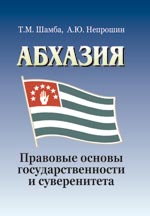
Shamba T., Neproshin А. Abkhazia: Legal basis of statehood and sovereignty. М: Open Company "In-Oktavo", 2005, 240 pages.
Далее читайте:
Абхазы -
(самоназвание апсуа) автохтонное население Кавказа.
Абхазия
(краткая историческая справка).
Исторические лица Абхазии (биографический справочник).
|
